

If you’re planning an April or May wedding and wondering what flowers are in season for a spring wedding, you’ve picked one of the better times of year for British blooms. After months of bare hedgerows and short days, the countryside properly wakes up, and florists suddenly have a real range to work with. At Blackstock Country Estate in Hellingly, East Sussex, we see it happen every year. The grounds start to green up, blossoms appear on the trees, and couples getting married here have plenty of seasonal choices for their bouquets, buttonholes and the bigger arrangements around the barns.
Here’s a breakdown of what’s generally available across the spring months, along with a few honest things worth knowing before you brief your florist.
Before you get into specific stems, it’s worth thinking about why seasonality matters in the first place. Seasonal flowers tend to come with a few practical benefits. They’re usually cheaper because your florist isn’t paying to fly them in, they look fresher because they haven’t spent days in transit, and they sit more naturally with a countryside venue. For a barn wedding at Blackstock Country Estate, where the Tudor Barn dates back to the 16th century and the grounds look across the Cuckmere valley, flowers that echo the landscape outside tend to feel more at home than anything forced.
Spring also covers a wide stretch of the British growing calendar. Early March can still feel quite wintery, with a limited selection, while late May is already bumping up against early summer. The honest answer to what flowers are in season for a spring wedding depends quite a bit on which week of which month you’re actually getting married.
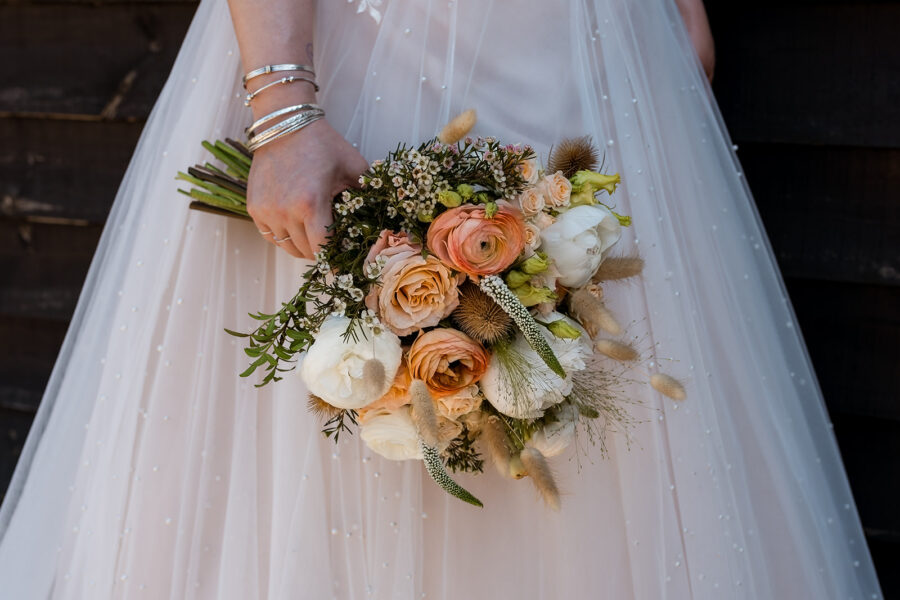
Image above by Simon Booth
April is where things properly open up. The British growing season is underway, and couples getting married this month have a genuinely wide choice of what flowers are in season for a spring wedding.
Tulips are still going strong, including peony-style varieties that look stunning in bouquets. Ranunculus is at its peak. Fritillaries, with their delicate bell-shaped heads, add something a bit different. Hyacinths, narcissi and muscari are still around, and you’ll also see anemones, lilac and flowering shrubs like spirea coming through. Bluebells appear in British woodlands from mid-April onwards, though they’re better admired than picked for arrangements.
If you’re getting married at Blackstock Country Estate in April, this tends to line up with the grounds coming into full spring colour. Past couples have had their photos taken around the lakes and meadows when the landscape is at its brightest.
May is the most flower-rich month of the spring. The growing season has properly kicked in, and florists can pull from the widest seasonal range of the year so far.
You’ll find alliums with their tall, round heads, irises in deep purples and blues, lily of the valley with its tiny scented bells, sweet peas starting to appear in pastel shades, lupins, foxgloves, forget-me-nots, cornflowers and, if the timing is kind, peonies from mid to late May. Wisteria is spectacular if it’s in flower, though it’s only around for a short window.
For couples thinking about what flowers are in season for a spring wedding that sits right on the edge of summer, May gives you the best of both worlds. Fresh spring blooms with the fullness you’d normally associate with June.
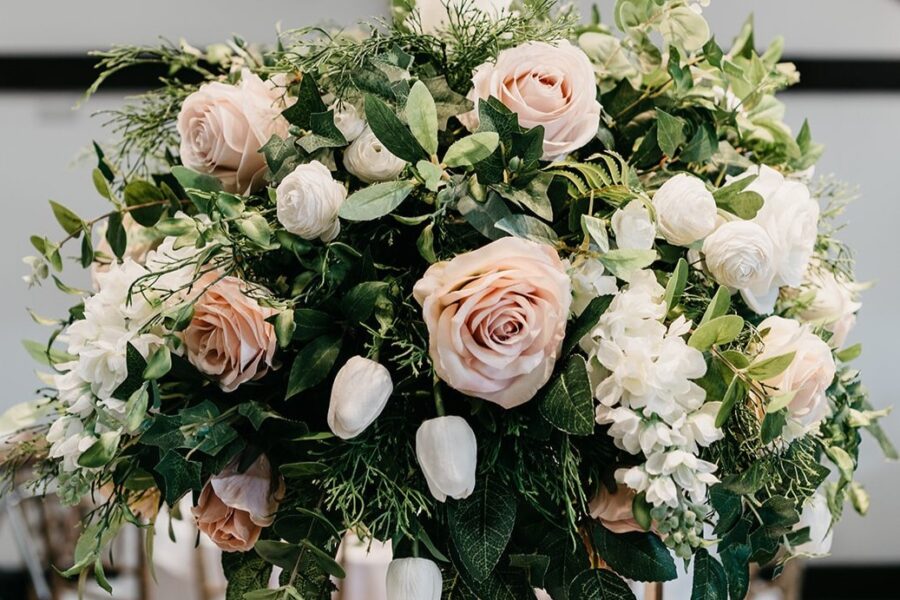
Image above by Samuel George
When working out what flowers are in season for a spring wedding, remember that availability shifts year to year depending on the weather. A late frost can hold things back by a couple of weeks, while a mild spring can bring everything early. Most good florists will work with a colour palette rather than promising specific stems, which gives them room to swap things out if a particular flower isn’t looking its best that week.
If you’re set on one specific flower, talk to your florist early. Peonies in early May are the classic example. They might not quite be ready depending on the year, and a good florist will tell you that upfront rather than overpromise.
Think about scent. Hyacinths, narcissi, lilac and lily of the valley all carry a strong fragrance and can fill a barn beautifully, especially one with the ceiling height of the Tudor Barn. Worth flagging to your florist if you’ve got guests with strong allergies.
Florists tend to book up 6 to 12 months in advance, so once your venue is confirmed, flowers are worth sorting reasonably early, especially for peak spring weeks in late April and May. If you’re getting married at Blackstock Country Estate, our wedding coordinators can point you towards local florists who’ve worked at the venue before and know the barns.
The setting also does a lot of the heavy lifting on its own. The Tudor Barn has 500-year-old oak beams and antique cartwheel chandeliers, and The Granary has its own character. Many couples find they don’t need as much floral decoration as they originally thought. A few well-placed arrangements, bouquets and buttonholes often go further than trying to fill every corner with stems.
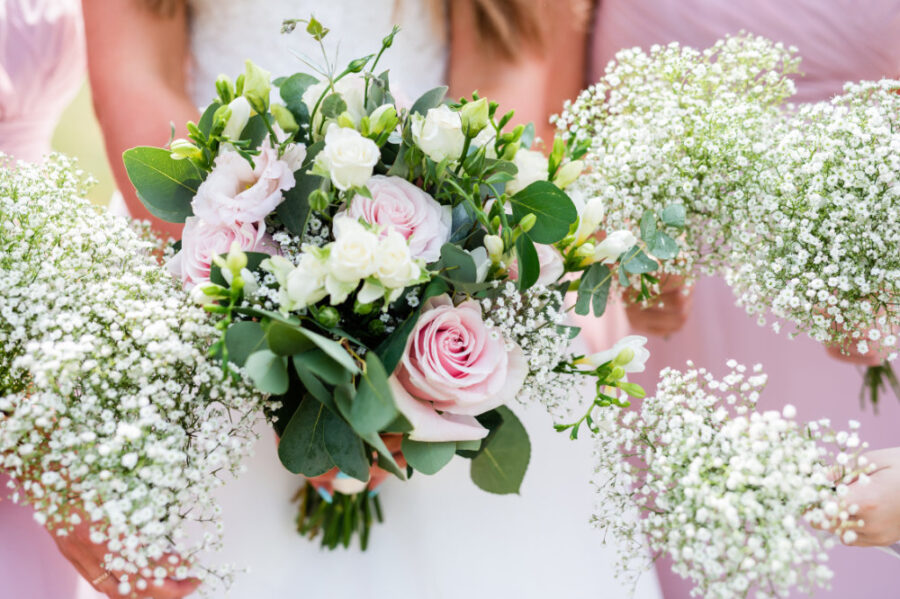
Image above by Sarah Williams Photography
If you’re still working out what flowers are in season for a spring wedding and whether a countryside barn is the right fit, the easiest thing is to come and see the place for yourself. Spring viewings are a good time to picture the day properly, with the grounds waking up and the light at its best. Call the team on 01323 848 006 or email events@blackstockestate.co.uk to book a private viewing or to ask any questions about availability and packages.
For more on timings, weather and the rest of the details, take a look at our broader guide to planning a spring wedding.
What flowers are in season for a spring wedding in the UK? April brings tulips, ranunculus, fritillaries, hyacinths, narcissi, muscari, anemones, lilac and flowering shrubs. May adds alliums, irises, lily of the valley, sweet peas, lupins, foxgloves and peonies if the timing is kind. Earlier spring from late February into March is more limited and usually relies on daffodils, narcissi and early blossom.
How much should we budget for spring wedding flowers? Most UK couples spend between £1,500 and £3,500 on wedding flowers, depending on guest numbers and what you choose. Seasonal spring flowers sit at the affordable end of that range. Out-of-season or imported stems drive up costs.
Do we need flowers for the grounds as well as the barns? Not really. The 70 acres at Blackstock Country Estate already bring plenty of natural colour through the spring. Most couples focus their florist’s work on bouquets, buttonholes and arrangements inside the Tudor Barn and The Granary.
Does spring weather affect what flowers are in season for a spring wedding? Yes. A late frost can hold British blooms back by a couple of weeks, while a mild spring brings everything early. Outdoor ceremonies at Blackstock Country Estate run from May to September, and the Tudor Barn is kept set up as a licensed indoor ceremony option regardless of the forecast.